

Speeding up permitting should be a key goal for cities like Salem that want to build more housing, according to an expert who spoke to local businesses Monday.
That point from speaker Michael Andersen of the Sightline Institute drew sustained applause from the audience in a full room of business leaders, developers and city officials at the Salem Area Chamber of Commerce event held at the Salem Convention Center.
Andersen is a Portland-based expert in city housing policy for the nonprofit. During an hour-long presentation, he shared suggestions for ways to build more homes and apartments through zoning reform and efficiency.
The consequences of not building enough homes and apartments, he said, are felt in many households. The typical Salem renter, for example, saw a $200 a month increase in rent in 2021, totaling $2,400 more spent on housing per year, he said.
“Can you imagine if the median property owner’s property taxes went up by $2,400 a year? Can you imagine the scale of freak out that would be involved with that? And can you further imagine that there were no additional services provided with that additional rent?” Andersen said.
Rent increases in Salem outpaced comparable cities between 2016 until about 2021, and rent continues to increase at a relatively high rate locally, he said.
“Salem’s issues are not unique, and yet they are somewhat more acute,” Andersen said. Those issues predate the Covid pandemic.
“Salem had a problem building enough homes, keeping up with demand, and it hasn’t yet been able to fully solve that problem,” he said.
The high cost of housing is also a key driver of homelessness, he said, and it’s also getting harder for people to find a spare bedroom to rent when they’re on the brink of becoming homeless.
Andersen shared a series of suggestions for ways to increase housing development and decrease housing costs in Oregon. Many of them are policies that the state and city are working to implement.
Earlier this year, Salem approved a six-year roadmap of strategies to build more housing, including simplifying and speeding up the permitting process. The plan didn’t implement any of the 17 proposed actions, which will each go through individual steps before taking effect. The city council asked staff to prioritize speeding up the permitting process, which currently often takes months.
The city’s planning commission will begin work later this month to revise the city’s housing code. Ideas they’re considering include allowing for more homes on a single lot and loosening other requirements. The Salem City Council will hear their proposals in December.
Oregon, Andersen said, is a nationwide leader on legalizing accessory dwelling units, which are small buildings on the same lot as a home that people can live in. The state also leads in allowing duplexes to be built in more places and for reducing the amount of parking required to accompany new housing projects.
Among the state’s efforts are recent zoning changes to expand the places where multiplexes with two to six homes each or a cluster of cottages can be built.
Such policies have taken off in Oregon cities like Eugene and Bend, but not as much in most other places, including Salem, which he said has seen a slight decrease in permits for such middle housing, Andersen said.
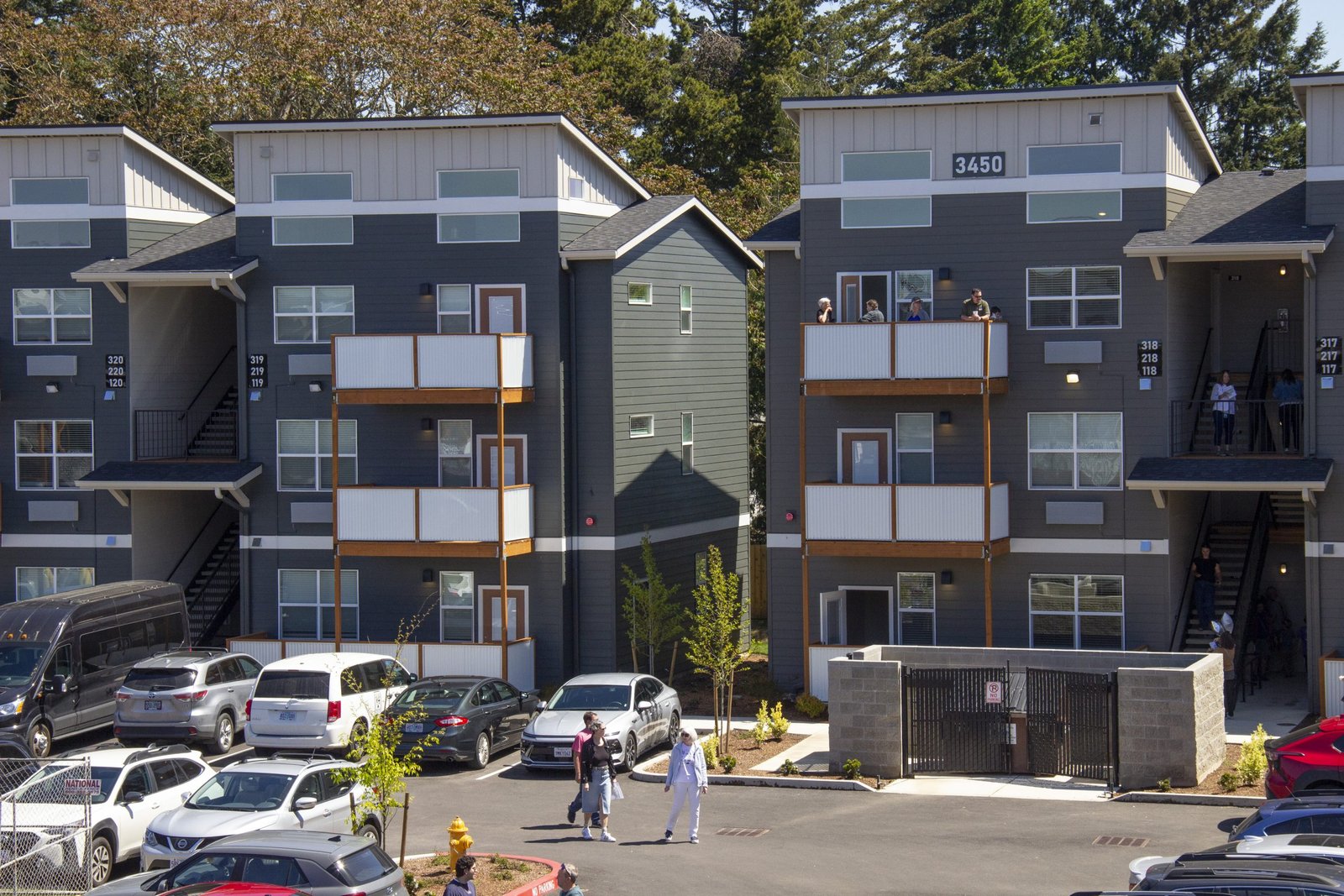
He said Salem is a state leader for the amount of places someone can build a four-story apartment building within an urban area. About 25% of the city allows such housing. Portland is in second place with about 20%.
Other issues impacting housing in Oregon, he said, include “bad faith” historic districts attempting to prevent new buildings and inefficient corporate taxes.
He said getting the public to support taller buildings in their neighborhoods will require focusing on the outcome: the stories of people who can afford a place to live as a result.
Andersen took questions at the end, including one from Mayor Julie Hoy.
“I am curious, if you were the mayor of Salem, what’s the first thing you would do to increase housing production?” she asked.
In response, Andersen said that zoning changes are the most affordable and effective route. He said the state’s new model code is a great direction.
“Salem is actually doing better than most cities, but I’m sure there are things that it could find that could remove some of the accidental barriers that are in some of those zoning codes,” he said.
And, he said Oregon cities should look to Houston, Texas’ success in getting permits approved within a few weeks.
“All across the political spectrum, I see very left wing people, very right wing people in elected office all saying ‘It takes too freaking long to get permission to build something on your property,’” he said, to applause. “My dark suspicion is that the reason it’s so fast in Houston is because they just don’t have very many rules.”
Contact reporter Abbey McDonald: [email protected] or 503-575-1251.
A MOMENT MORE, PLEASE– If you found this story useful, consider subscribing to Salem Reporter if you don’t already. Work such as this, done by local professionals, depends on community support from subscribers. Please take a moment and sign up now – easy and secure: SUBSCRIBE.
Abbey McDonald joined the Salem Reporter in 2022. She previously worked as the business reporter at The Astorian, where she covered labor issues, health care and social services. A University of Oregon grad, she has also reported for the Malheur Enterprise, The News-Review and Willamette Week.
