

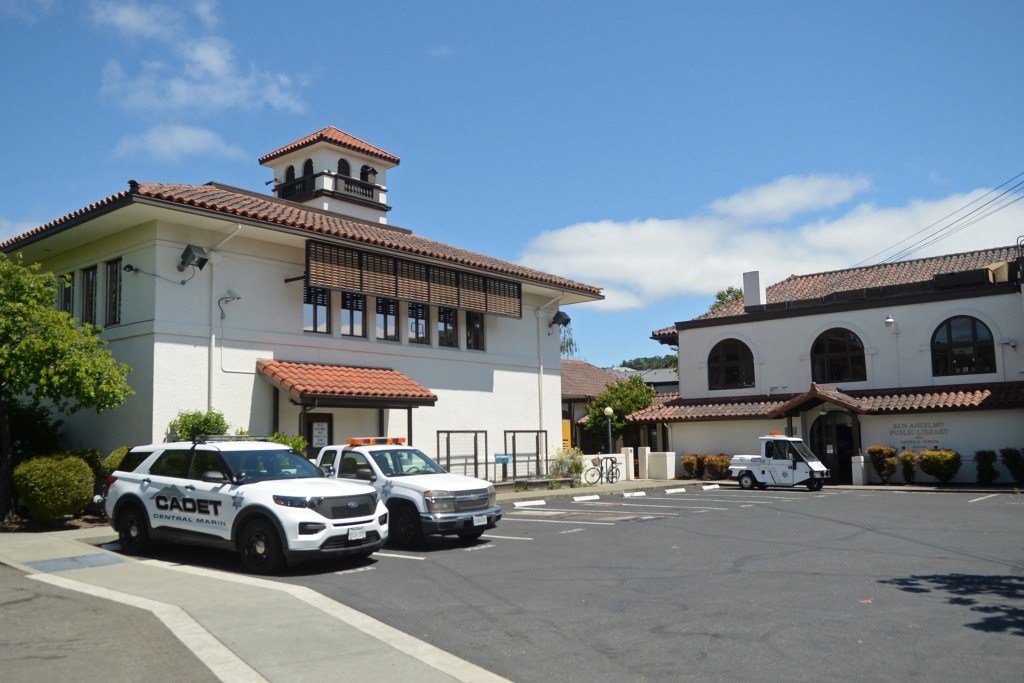
San Anselmo is taking a pass on stricter green building standards.
The Town Council voted Tuesday against amending the town’s requirements to go above the basic California green building code, known as CALGreen. While some council members were on board with all the requirements, they noted that changes could be made later.
“I’m not necessarily convinced that every single provision of the CalGreen Tier 1 requirements as currently stated are things that we would necessarily want to keep,” said Councilmember Yoav Schlesinger.
The motion to adopt the standards needed a majority in favor. Mayor Tarrell Kullaway and Councilmember Steve Burdo were absent from the meeting. Vice Mayor Eileen Burke voted against the changes, saying some of the requirements would affect too many people.
“I think it’s a step too far for us,” Burke said.
A new state law means if the town wants to amend its building codes, it only has a few weeks to do so. Assembly Bill 130, which pauses all updates to local building codes in order to facilitate housing production, goes into effect on Oct. 1 and ends on June 1, 2031.
The California green building code aims to reduce greenhouse gas emissions by making buildings more energy and water efficient, according to Eric Robbe, a town building official. It includes basic mandates, like requiring electric heat pumps, water heaters and air conditioning systems in new construction.
Community Development Director Heidi Scoble said local jurisdictions can “go above and beyond” and adopt even stricter codes — called Tier 1 measures — which San Anselmo adopted in 2022. The updated 2025 basic standards include requiring infrastructure for electric vehicles, baselines for heat pumps and solar energy and bicycle parking for commercial buildings and apartment buildings.
The Tier 1 standards would have extended required bicycle parking to hotels and motels. It also would have required a life cycle assessment for the building, the reuse of existing buildings and the owner to hire a specialized inspector, Robbe said. Accessory dwelling units, homes built after 1992 and remodels less than 750 square feet would have been exempt.
“To go forward and adopt the Tier 1 standards tonight I think is the right path for San Anselmo, and then we can consider individual amendments to pull it back,” Schlesinger said.
Schlesinger wondered how applicable some requirements in the Tier 1 measure were — specifically, those with higher costs for projects of 50,000 square feet or more. These measures included maintaining 75% of the structural components of the building, and using low-carbon construction materials.
Vice Mayor Eileen Burke wondered what the cost increase could be for regular buildings.
“My question is framed in terms of, we’re trying to encourage housing, right?” Burke said. “So that’s the balance we’re trying to strike, is how far can we push climate but also encourage housing?”
Electric-vehicle infrastructure for a house could cost $500 to $6,000, Scoble said. For heat pumps, costs could range from $4,000 to $8,000 and solar $12,000 to $20,000.
“I will say the EV requirements for multifamily and non-residential are pretty significant and could be seen as cost prohibitive,” Scoble said.
